
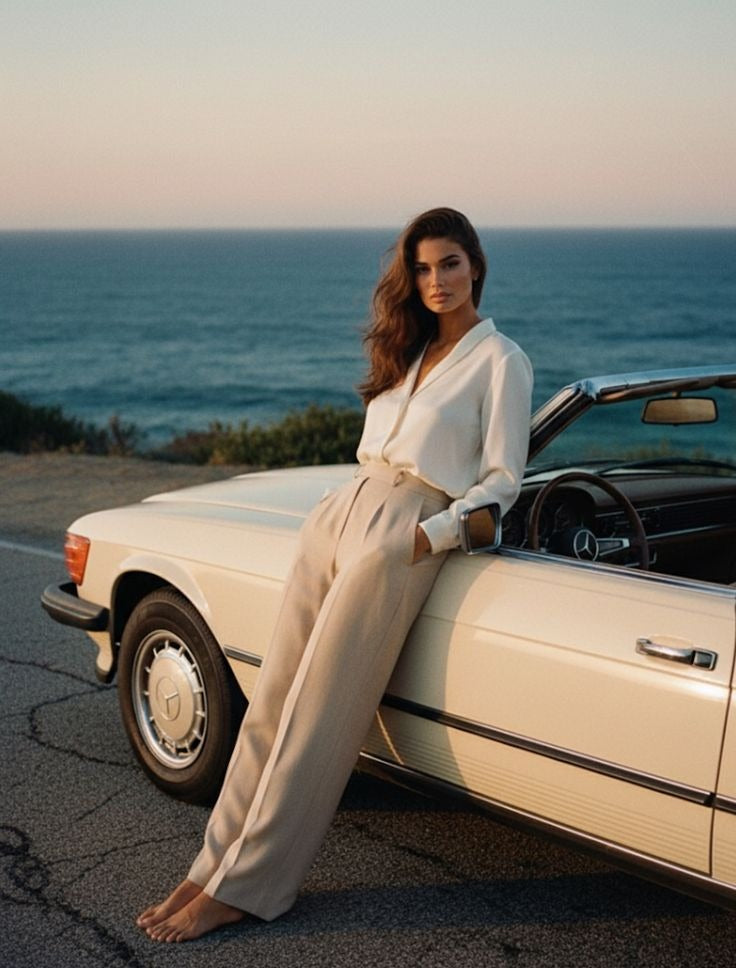
For a long time, polish felt like the goal. Feeds were curated. Colour palettes were cohesive. Homes were staged before the camera turned on. Even brands softened their language so nothing felt too sharp or too specific. The internet became a place of clean lines and clean lighting, where imperfection was edited out before it had a chance to exist.
It made sense at the time. Cohesion signalled taste. Consistency built recognition. If something looked effortless, it was assumed to be successful.
But polish, when it becomes universal, stops feeling aspirational and starts feeling distant.
Scroll for long enough and everything begins to blur. The kitchens are similar. The outfits are interchangeable. The tone of voice hovers somewhere between upbeat and neutral. Even the “candid” moments feel rehearsed. It’s visually beautiful, but emotionally flat.
What’s shifting now isn’t a rejection of quality. It’s a rejection of sameness. People are gravitating toward content that feels inhabited rather than staged. A voice that sounds like it belongs to someone specific. A room that looks lived in rather than cleared for a shoot. A brand that shows texture rather than smoothing it away.
After years of optimisation, there’s a growing appetite for sensation again.
The digital environment flattens experience. Screens compress colour. Sound is filtered. Movement is edited. The more time spent inside that flattened world, the more noticeable the absence of depth becomes. So when something feels dimensional - a space with real acoustics, a table lit by candlelight, a restaurant that hums rather than blares - it lands harder.
The same principle applies online. Content that leaves in the pause. A founder speaking without a script. A brand willing to show process rather than only the finished result. It feels closer. Warmer. More real.
This isn’t about chaos. It’s about texture.
Texture suggests there is a person behind the frame. That something was felt before it was posted. That not every edge was sanded down in pursuit of approval.
Aura has always been less interested in how something looks in isolation and more interested in how it feels to be inside it. The temperature of the light. The weight of the room. The way scent lingers after someone has left. Online, that same principle holds. It’s not the polish that holds attention. It’s the atmosphere.
If polish was the currency of the last decade, presence is becoming the currency of the next.
That requires restraint in some places and courage in others. It means allowing texture. Allowing specificity. Allowing a voice that sounds like it belongs to someone, not everyone.
Perfection earns approval. Atmosphere earns loyalty.
Editorial independence — This story was written by Aura. When a piece is supported by a partner it is labelled here, and partners see no copy before it is published.